Missionary Cenacle Family

The Missionary Cenacle Family is a Roman Catholic organization comprised of four branches:  the Blessed Trinity Missionary Institute, the Missionary Cenacle Apostolate, the Missionary Servants of the Most Blessed Trinity, and the Missionary Servants of the Most Holy Trinity.  A leadership council, composed of the general custodians and others from the four branches, leads the family and ensures that the members, and others who share in this charism, have the means and opportunity to live out their missionary vocation.  The family branches include lay people and consecrated religious, including sisters, brothers, and priests.  The Family is present across the U.S., and in Puerto Rico, Haiti, Mexico, Costa Rica, Colombia and Honduras.

Missionary Cenacle Spirituality

Espiritualidad del Cenáculo Misionero

See the source image

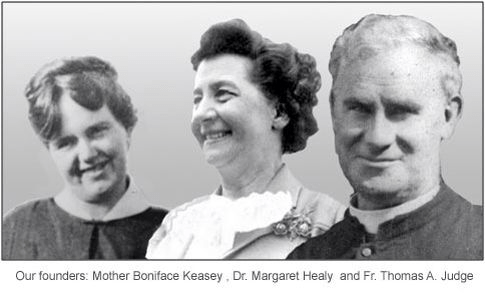
Our founder, Father Thomas Judge, seeing the loss of faith among traditional Catholics, especially of the immigrant community, saw a spiritualized laity as the direct response. He designed a spirituality based on the Word of God and frequent recourse to the Eucharist to sustain his followers so that they never grow tired in the cause of searching out lost sheep and doing good for others. The Missionary Cenacle Spiritual Exercises are the expression of this: nourished by the Word and the Eucharist we become more aware of the Providence in our every day life and grow in zeal and the virtues for the apostolic life.  

Nuestro fundador, el P. Tomás Agustín Judge, al ver la merma de la Iglesia de católicos tradicionales, sobre todo en las comunidades inmigrantes, encontró en un laicado espiritualizado el remedio directo para esta situación. Desarrolló una espiritualidad a base de la Palabra de Dios y participación frecuente en la Eucaristía para sostener a sus seguidores, así que no se cansen de buscar a la oveja perdida o hacer el bien para otros. Los Ejercicios Espirituales del Cenaculo Misionero son realización de ésta: nutridos por la Palabra y la Eucaristía, nos despertamos a la Providencia de la vida diaria y crecemos en el celo y las virtudes para una vida apostólica… 

What I need to know! — Missionary Cenacle Spirituality

Five Elements of the Missionary Cenacle Spiritual Exercises I. PRAYERFUL SILENCE               “Silence is the handmaiden of prayer and recollection. Let us think of the silence of the Son of God, and. observe silence for the sake of Him who was silent for them under trials and circumstances that could have provoked Him to speak. […]

What I need to know! — Missionary Cenacle Spirituality

Eighth Day: Called and Consecrated for Mission in Family

As Jesus leaves the desert solitude to fulfill his messianic mission, he immediately begins to form community around him.  Among his first acts is to call the first disciples by name.  He invites them to share intimately in his mission, to follow him, to learn his way, his truth, to share in his life. Sent forth two by two, they joyously share the Good News with others.

He surrounds himself with a new family whose life together centers solely on the fulfillment of the Father’s will: “these are my mother and brother and sisters.  Whoever does the will of God is brother and sister and mother to me” (Mark 3:34-35).  This new family is the beginnings, the first fruits of that glorious Kingdom of peace, unity, and communion that Jesus wishes for all humanity and all creation.

Today we contemplate this central place of communion and community in the life of Jesus and rejoice with him in being able to share in an apostolic community of faith through the Missionary Cenacle Family.  These fruits of the kingdom continue to be made manifest in our day and time through this precious communal gift of God’s goodness and love.

The Grace We Seek: To more deeply treasure the gift of the Missionary Cenacle Family.

Reflection Material

A. From theRule of Life of the Missionary Servants

2.  We are two religious Institutes of pontifical right, branches of one apostolic family, who have been called by God to be missionaries in the Church: some as Sisters, Missionary Servants of the Most Blessed Trinity; and others as priests, deacons and Brothers, Missionary Servants of the Most Holy Trinity.  Together, our religious and lay branches comprise the Missionary Cenacle Family.

8.  We are to call forth apostolic men and women from everyday walks of life to become lay associates in the Missionary Cenacle Family.  A family spirit should be demonstrated by loving regard among the members of the branches and, when feasible, by collaboration in apostolic works.  It is our particular responsibility as religious members of this family to conserve this Cenacle spirit and to be the sanctuary where that fire is kept.  Father Judge declared that if the right spirit is maintained, if the primitive spirit is passed down, this family idea will engender the most beautiful fruits for the honor and glory of God and for the edification of the Church.

From theRule of Life of the Missionary Cenacle Apostolate

2.  We, the Missionary Cenacle Apostolate, are a self-governing, international association of the Catholic faithful, who have been called by God to be missionaries in the providence of our daily lives.  We have a special relationship with the Missionary Servants of the Most Blessed Trinity, the Missionary Servants of the Most Holy Trinity, and the Blessed Trinity Missionary Institute.  Together we comprise the Missionary Cenacle Family.

8.  We are to call forth apostolic men and women from everyday walks of life to become Associates in the Missionary Cenacle Apostolate and to encourage those who feel called to other branches of the Missionary Cenacle Family.  We demonstrate a family spirit by having a loving regard for all the members of the family and, when possible, by collaboration in apostolic works.  It is our particular responsibility as members of this family to spread the Cenacle spirit. Father Judge declared that if the right spirit is maintained, if the primitive spirit is passed down, this family idea will engender the most beautiful fruits for the honor and glory of God and for the edification of the Church.

B. From the Word of God

The disciples are true brothers and sisters of Jesus – Luke 8:19-21

The life of the community comes from communion with Jesus – John 15:1-10

To be an apostle is to have Jesus as our true friend – John 15:11-17

The apostolic community provides a necessary support for mission – Acts 2:42-47

C. From Father Thomas Augustine Judge, C.M.

1. Conference to Cenacle Family  (Pentecost Meeting, May 31, 1924)

            If you get nothing else out of (these meditations) but this, the thought, the wish, the ardor to spread that Cenacle spirit, then you will be blessed. We must look out for delusions, and to my mind, there is a great deal of delusion regarding programs and schedules.

            There must be a certain order, of course, but that order must not be placed before the spirit. The main thing is a heart filled with the love of God, a heart that wishes to do much for God. The main thing is a spirit of sacrifice, and if we have that we have everything. If we have that passion “I want the Cenacle spirit, I want to breathe it, I want to scatter it” if we have that, the Cenacle will grow by leaps and bounds.

            The mission of the Inner Missionary Cenacle is to conserve that Cenacle spirit. The Inner Missionary Cenacle is the sanctuary where that fire is kept. It is the duty of the superiors of the Inner Missionary Cenacle to see that the fire will never go out. . . .

            With expansion there are certain complex difficulties that come along, and with expansion sometimes there is menace. Any expansion that holds back the spirit is wrong; any development prejudicial to that Cenacle spirit would not be of God.

            What are you going to give to your Associates? Give that which is essential. Give that which they need. That is the Cenacle spirit. With that nothing will upset them. Opposition will not deter them. They will be persevering in God’s service. They will be resourceful.

            Briefly, our aim is to increase our own and to spread devotion to the Holy Trinity, to the Holy Spirit, to exalt the Holy Name of Jesus, and all the Missionary Cenacle stands for, and to pray for priests. Get this one idea, bring it to your meditation tomorrow morning, that the largest good you may do for your Associates, the largest good you may do for the Missionary Cenacle, for the Church, for the Triune God, is to inflame your hearts with the Cenacle spirit and give it out to others. Pray to our Blessed Mother; she wants to communicate that to you. Ask the Apostles, that through their intercession you may be inflamed with this spirit.  [MF:8479-81]

2. Conference to Missionary Servants  (May 10, 1924)

              Our Divine Lord has promised to be in a particular way in the midst of those who gather in His Name. (Matt. 18:20) Prayer is a necessity. Prayer for one another is a mark of God’s favor upon the Cenacle. Any means or agency that will excite prayer, encourage it and perpetuate it, will be a transcending grace. Such a grace, to my mind, is the family spirit that exists among the Cenacles. How anxious, then, should we be that this good and pleasant dwelling together of brethren in unity persevere, and that it persevere we should give much thought and meditation to this grace, its necessity, and its blessedness.

            If . . . this family spirit continues between the Cenacles, it will be a great comfort to the two bodies. It will fortify all to withstand a great deal of the adversity that must be met with in the service of God and labor for the Church. If this family spirit flourishes amongst us, you will be a blessed, mutual help one to another: you will be conditioned to do much more good.

            The family idea is dear to God and to the Church. Never was there in this world such an ideal way of living as lived the early Christians. We have today in the Cenacle an approach to this, a very advanced approach in our present way of living. It would be a pity and reason for great sorrow if this should suffer interference and decay. Think of the mutual strength you may be to one another. Think of what you may do for one another. This may be so large and important a good that indeed, I hope and pray that your affairs will be so conditioned that you must depend upon one another, that you cannot do without one another, that you may realize that you need one another.

            My dear Sisters, then, give the (priests and) Brothers the help of your prayers. There are spiritual heights for them to take; there is a conquest over temptation, over themselves that will come largely through your prayers and sisterly charity. I declare that the (priests and) Brothers have a good will towards the Sisters. I know they are always willing to generously help the Sisters.

            It is a sacred duty of Custodians to see that this good and pleasant dwelling of brethren in unity continues, and that they effect all in their power that it may go on producing beautiful and lovely fruits. It is likewise the duty of Custodians where there are Brother and Sister Cenacles nearby to make inquiries as to the life of this family spirit, to discover any differences or grievances that would hurt it, to propose that which may help it.

            It is true that several abuses may shatter this beautiful relation; in fact, one or two may do this. However, this will not happen if Custodians do their duty. You are anxious to know my mind on this matter. You know it, but to make it the more positive and to help this holy tradition, I declare that I recognize the value of a family spirit, of a family working in the Church, of a family that with ardor will take these words from our dear Lord’s lips: “Going therefore, teach ye all nations: baptizing them in the name of the Father, and of the Son, and of the Holy Spirit.” (Matt. 28:19) [MF:850-853]

Seventh Day: Called to Follow Jesus

Impelled from the desert by the Spirit, Jesus undertakes the mission confided to him in his baptism.  Confident in his Father’s love, keenly aware of the Spirit’s presence and the Evil One’s guile, he begins the holy work of announcing and making present the kingdom of God.   It was to be a kingdom of peace: a universal community where all would be welcome as beloved sons and daughters of the Father.

This new community is marked not by power or pleasure, neither prestige nor possessions, but intimate communion with the heart of God and with one another in love and forgiveness.  They would come from a variety of backgrounds and situations: Roman collaborators and zealous Jewish patriots, coarse fishermen and learned scribes, women from among the poor as well as from the influential families.

Jesus called them all to follow him, and they did: some staying at home with their families, others accompanying  him on his teaching journeys, still others forever changed by his simple glance or the touch of his hand.  But all had one common binding unity: Jesus had called them and, listening, they had heard this call and become his disciples.  They were becoming “the new creation,” (Gal. 6:15) the Reign of God.

The Grace We Seek: To hear the voice of the Lord calling us and to respond in loving obedience in whatever way He desires.

Reflection Material

A. From theRule of Life of the Missionary Servants

23.  Christ calls us to follow him with liberty of spirit and to share in his emptying of self for others (Phil. 2:7).  He was celibate and poor (Matt. 8:20; Luke 9:58) and obedient unto death (Phil. 2:8).  We freely vow chastity, poverty and obedience as a personal response in faith to God whose love the Holy Spirit has poured out in our hearts (Rom. 5:5).

24.  Our religious profession binds us to the Church and its mystery in a special way.  By profession of vows we are joined together in our respective Institutes for the sake of apostolic mission, through the grace of the Holy Spirit.  Our vows should help us express a more generous love of one another in community; community life, in turn, should contribute to the faithful living of the vows.

From theRule of Life of the Missionary Cenacle Apostolate

23.  We seek to imitate Jesus who calls us to follow him with liberty of spirit and to share in his emptying of self for others. (Phil. 2:7)  In Baptism we were anointed with the Holy Spirit and united to Jesus in his mission as Priest, Prophet and King.  Our Act of Consecration is an affirmation of our baptismal consecration and our personal response to God whose love has called us to the Missionary Cenacle Apostolate.

24.  Our Act of Consecration joins us together for the sake of apostolic mission through the grace of the Holy Spirit. Our consecration encourages the expression of a more generous love of one another as a community. Community, in turn, contributes to the faithful living of our commitment to the Triune God and to the Missionary Cenacle Apostolate.

B. From the Word of God

A call that has existed from all eternity – Jer. 1:4-10;

. . . despite our weaknesses and sense of unworthiness – Exod. 3:4-14, 4:10-17

This call is God’s choice and flows from his freely given personal love, mercy and compassion –  Isa. 61:1-3

They, in turn, are sent forth by Jesus his trusted messengers and disciples to extend the mission and share in his glory – Luke 10:1-12, 17-20

C. From Father Thomas Augustine Judge, C.M.

1.  Letter to Missionary Servants in Puerto Rico  (August 28, 1932)

            “And in doing good, let us not fail. For in due time we shall reap, not failing.” (Gal. 6:9) Let us charter the year on this thought. Blessing and success are bound to be its consequences. The means given by the Holy Spirit to work out this blessed success is: “Let us work good to all men, but especially to those who are of the household of the faith.” (Gal. 6:10)

            We may very pertinently ask, how are we to work this good? I would say, through fraternal charity. Bear and forbear; live and let live. Let each one of you constitute yourself as a guardian of charity. Show brotherhood, for you truly and essentially are of the household of the Faith. Among yourselves, therefore, have a constant and abiding charity. Charity is never in danger unless self obtrudes and trespasses. Lest charity be hurt, keep the work in the foreground. Make the cause of God the main issue. Put the work of the Cenacle first, and may God’s honor and glory be ever the proximate and ulterior purpose.

            I look to you to be spiritual-minded motivated and actioned men and women. God has given us a great work. He has given over to us a remedy for so many social and moral evils – the Catholicizing and spiritualizing of youth. If we fail, we will fail because of self-seeking. It will be because we have been poaching on God’s interests; and in the end, what will we get out of it? Just a few miserable self-advantages, and our misery will be that we have failed the Church and defaulted our trust to youth.

            We are cautioned not to fail in doing good. We are encouraged by the promise that we shall reap. No doubt about it, there is a tedium in the application to duty, but there is a tedium also in pleasure. The most restless and discontented beings in this world are the play-boys, votaries of pleasure. They are ever seeking some new diversion. They must have some new thrill . . . And all this without compensation, without promise, living in themselves and for themselves and losing all the promise of dying in God. You, on the contrary, by being faithful and going on, will live in God and your promise, and pledged happiness, is that you will die in the Lord. It can be said truly of the brother who is faithful to his work, faithful to his duty, faithful to his vocation, faithful to his spirit, that while his duty may be onerous, even monotonous at times, he really has more pleasure in one day than pleasure-loving worldlings can find in months of pleasure seeking. . . .

            The best of all is this: Truly, there is the supreme consolation that fidelity means blessedness, and blessedness is the doing of good, for which in due time there will be the reaping of a reward that will not fail.  [MF:2075-76]

2.  Letter Conference to Pioneer Cenacle Members  (January 21, 1913)

            Seeing the good accomplished by you during the past year, it is a matter of constant anxiety with me lest the demon, enraged because of the souls you are saving, tempt any to (lessen their efforts) in a work they have begun for God, a work to which they were attracted by the Holy Spirit, and that thus the cause of Christ would be hurt. He leaves His interests to us. He commits His cause to our keeping, and after His grace and Providence, it is to prosper and bring forth fruit through us, for we are His instruments. May God grant, then, that no soul be lost through our sloth and indifference.

            It is evident that the Holy Spirit has favored and blessed you very much in calling you to a work so dear to the Holy Trinity. Why you have been favored above so many who might have returned much more to the Holy Spirit than you, is a mystery of God’s love that only Infinite wisdom can solve; but this much we do know, that God will demand much of us for this grace of graces. He has placed souls in your power. Jesus commits His interests to you, and the Holy Spirit Himself pleads with you.

            We cannot hope to do anything for God except by His grace. It should be our daily hunger to try to obtain more and more of this grace. Now, how can we obtain more and more of the free bounty of God’s? Firstly, by cooperating with the graces that He so plentifully bestows upon us. Secondly, by perseveringly thanking the Holy Spirit for His ceaseless shower of benedictions, and asking Him for more; thirdly, by following His inspirations and being vigilantly on the watch for His impulses.

            Sometimes He speaks to us through others, through nature, through adversity, through a book, a good companion. Every attraction that would lead us to the Sacraments, every impulse that would cause us to wound our self-love or foolish pride manifests clearly the Holy Spirit in our soul.

We should often make formal acts of adoration to the Holy Spirit by some reverence, some word acknowledging Him. There should be frequent prayer to Him, even though it be but aspirations. We have the custom of beginning all our letters with the invocation for His grace, “May the grace and peace of the Holy Spirit be with us forever.”  This is a truly beautiful and devotional practice, to greet and present one another in the grace and peace of the Holy Spirit.

            We can offer our day to the Holy Spirit, and when on a missionary visit we can pray to Him that a rebellious subject may be tamed and led by us and that we may get the light to make the proper answers. May the Spirit of God bless and enlighten you.  [MF:3683-88]

3.  Sermon: First Profession, Missionary Servants of the Most Holy Trinity  (September 8, 1932)

            Our Lord is humanity’s teacher. He came to teach men how to live and how to die, and that they might securely obtain life everlasting, He gave them a rule of life – not as the Ten Commandments. This rule of life pertains to every man and woman and child in God’s creation. All are bound to the observance of the law of God.

            But some were not content with doing what is required, like the young man in the gospel who said to our Lord, ‘All these have I kept from my youth, what is yet wanting to me?’ (Matt. 19:20) Our Lord then held out a higher way of life, the life of the evangelical counsels:  Poverty, Obedience and Chastity. From the beginning of the Church generous hearted men and women, urged by a particular grace, by an impulse of the Holy Spirit, urged by charity, followed these counsels.

            After a while some wanted a greater stability in the keeping of these, and we find them going into solitude, going where they would not be distracted, where they could pour out their souls, and say in the words of the Canticle, “I found him whom my soul loveth.” (Song of Sg. 3:4) I will embrace Him with my love and will never let Him go. My beloved has given Himself entirely to me and it is just that I should give myself to Him. Jesus in me and I in Him. To find Him they went into the desert places, and then for mutual edification, help and direction they gathered themselves together into communities, and from out of that has come all this glory of the Church, the religious life as we find it today.

            What is the religious life? It is the highest triumph of the Cross of Jesus Christ. I tell you, our blessed Lord has no greater triumph than in the heart of the man or woman, one who lays his or her heart on God’s altar and says, “O Christ, I am Thine and You are mine. You have given Yourself, my love, to the limit, and I return all that I have to Thee.”  That is the meaning of the religious life. Oh what a way to live is this. It is so secure, it is so pure, it is so filled with merit. It brings paradise to earth, and it gives such guarantees of life everlasting.  Those who have promised their vows have found their Beloved and they have fastened on to Him. They have sought Him and now they can say that whether they live or die, they live and die in Jesus Christ.  [MF:12273-74]
Sixth Day: The Spirit of Mercy and Compassion

Jesus entered the solitude of the desert conscious of his particular mission, his vocation.  There he encountered ever more deeply an awareness of the Father’s love, how he truly was the “Beloved Son.”  There the Spirit continued to instruct and guide him in his humanity in how to be God’s Anointed, the Suffering Servant on behalf of the whole creation.  In the desert solitude Jesus also confronted the demons, the forces of evil that would attempt to distract from and even derail this work of our salvation.  He learned their “names” and specifically confronted their deceptions, vanquishing them by the power of the Word.

Enfolded in God’s unconditional and forgiving love, with Jesus in the desert, we too face the particular demons that have in the past or presently do assault and disturb us.  Like Jesus – and by the power of His Word and Spirit – we too can diminish or vanquish the power of those demons to bother or afflict us any longer.

The Grace We Seek: Through the Sacrament of Penance to recognize and reject with His power the personal demons that have tempted and troubled us.

Reflection Material

A. From the Rule of Life

16.  Because of our need for God’s mercy in our brokenness, we are to approach the Sacrament of Penance frequently for reconciliation and healing.  By our experience of sacramental forgiveness, we grow in mercy and compassion towards others.

B. From the Word of God

The power of sin with us – Rom. 7:14-25

Returning frequently to the Sacrament of Penance – Luke 15:10-32

Growing in mercy and compassion towards others – John 8:2-11

The love we had in the beginning – Rev. 2:1-4

C. From Father Thomas Augustine Judge, C.M.

1. Conference to Missionary Servants  (February 1922)

            “And he went down with them, and came to Nazareth, and was subject to them.” (Luke 2: 51) We are just now, in our devotion, inter-season. The Christmastide has waned and the Lenten Season is not yet in its dawning. The liturgy of the Church that brings before us the infancy of our Divine Saviour and His boyhood has fluttered these Christmas pages into the past but it does not yet introduce us into the public life of our dear Lord. At present we commemorate the hidden life of our blessed Saviour.

            The hidden life of our dear Lord teaches us many salutary lessons and none of these is of more value than that at times we too should withdraw from the busy haunts of men. Privacy is ever easily possible and privacy is necessary for self-reflection, and self-reflection is very necessary for advance in perfection. Graciously our blessed Lord permits us to companion Him in His hidden life. We can withdraw in prayerful seclusion; we can give ourselves over to the work of introspection, to adore Jesus and to imitate Him in His hidden life. This, indeed, will please Him very much . . .

            Christmas has gone with its days of peace and its chiming of joy and gladness. It is well at this moment to take note again of any holy inspirations and resolutions we might then have had. It is likewise well for us to forecast the long penitential days, whose shadows will soon begin to creep toward us. We are in this inter-season, with our Lord in His hidden life, and many are the offerings we may make to Him in hidden ways. No work we engage in will give us more delight and our souls more profit than the purgation of ourselves from all that may be displeasing to Him and to begin seriously to labor for a greater perfection.

            If we will but put into practice the self-examination spoken of above, if, prayerfully, we beseech the Holy Spirit to make known to us that in which we may be amiss, we will be greatly helped in our cleansing and great advance also will be made in the work of sanctification. This two-fold spiritual process should ever be before us and we should give ourselves to it with avidity.

It is surely of good logic that he who wishes the end, wishes the means to that end. All wish such a blessed end (as perfection) and if we be sincere, we just as ardently wish the means to procure that end. The means, you know, are the pious exercises of the day, the work, the devout application of ourselves to prayer and to our devotions, the faithful and generous living out of Cenacle practices, and above all to ever cherish a very particular love of our dear Lord, to strive to make this more and more personal so that our every thought, word and action may be for Him and contribute to His honor and glory.

            (Let us) correct old faults, long-lived bad habits, and ever advance in perfection.  O Jesus, Mary and Joseph, teach us the sweetness of holy solitude. Grant us grace at times to prayerfully withdraw from the unwise multitude. May our hearts be in union with yours and may it be our blessing that we will do much unknown to the world and for you alone. [MF:673-74]

2. Retreat Conference To Missionary Servants  (August 24, 1921)

            Our Blessed Lord came into this world to teach and to have human experience in all ways like ourselves, except sin. He found there are certain chords in the human heart, likes and dislikes, need of sympathy. He experienced all these joys and griefs – only knowledge of sins committed He did not have. He felt the need of sympathy. He reached out for help in the hour of trial. He found there are certain griefs in the human heart that unless let out, kill the man.

            Therefore to give us a sacramental consolation, Jesus instituted the sacrament of Penance. How deep down in His heart Jesus had to think to institute that sacrament of peace and consolation which confession alone gives. The beneficent effects of salvation! The relief of confession! The penitent enters accursed and comes out blessed.

            What happens? It is so short a time for so great a change. We kneel down and say, “Bless me, Father, for I have sinned.” Then we tell the history of our life since our last confession. Then comes the act of contrition. Then the priest lifts his hands over the sinner’s head and says some words, and the most wonderful thing happens, more wonderful than the rising of the sun. “Thy sins are forgiven thee.” (Matt. 9:2) We come forth, determined to sin no more.

            Outside of the Church death is unbearable, sickness hateful. They marvel at Catholic deaths but we are happy in our deaths, because we have those words “Whatsoever you shall loose on earth is loosed also in heaven.” (Matt. 16:19) The power to release, unbind sins, is a wonderful thing. The priest has the power to forgive sins as Jesus has, but with this difference: Jesus has this power of Himself, the priest only by delegation. The effects are the same.

            Think of the torments that Jesus endured that we might have the Sacrament of Penance. We are all troubled about the examination of conscience. We should rather think how good Jesus is to give us this opportunity. How many of us really thank Jesus for permitting us to go to Penance? When you go to confession you receive infinite grace. Sanctifying grace is that grace which makes the soul more pleasing to God. We get grace through prayer and the Sacraments. The more grace we receive the more we cooperate in the will of heaven. So we should be hungry for graces. [MF:12337-38]

Fifth Day: The Transforming Power of the Spirit

It is the Spirit who descends upon Jesus at his baptism, who leads Jesus into the desert to be tested and purified.  It is the Spirit who moves in Jesus as he carries out his messianic mission of bringing the good news to the poor, healing the sick, freeing the prisoners, restoring sight to the blind.  It is the Spirit whom Jesus pours out on the church and the world as he breathes forth his life on the cross.  It is the Spirit who descends in power on the Church at Pentecost, who emboldens and enlivens the early church, sending forth the first apostles on mission to the whole world.

We take this day to contemplate that same Spirit, to beg the Spirit to be in us and with us, to “attract” the fire of that Spirit through our fervent prayer and desire.  This is the Spirit of Power, the Lord and Giver of Life that has been given to us individually and as a People and as a community.

The Grace We Seek: A desire to attract the Holy Spiritto ourselves and to the whole of humanity.

Reflection Material

A. From theRule of Life

11.  We are to make the Holy Spirit better known and loved. By steadfast prayer in our Cenacles we seek to attract the Holy Spirit so that our own hearts may be enkindled with God’s love and that we may spread this fire to others. We ask to be filled with the gifts of the Spirit, wisdom and fortitude especially.

B. From the Word of God

Jesus comes to us in the Spirit – Luke 24:13-35

Persevering prayer attracts the Holy Spirit – Luke 11:9-13

The Spirit strengthens us in our weaknesses – Rom. 8:26-27

The fruits of the Spirit – Gal. 5:22-26

C. From Father Thomas Augustine Judge, C.M.

1. Conference to Missionary Cenacle Family – Pentecost Meeting  (May 31, 1924)

            All through the Gospels we find our Lord using souls as His instruments for good. The great Mystery of the Incarnation, at the beginning of His life in this world, bears witness to the fact that the human agent may participate in divine work. It is His will, understand, that this fire should scatter, that it should scatter through you and you may thank God for this grace, for your selection. It should give you, certainly, a holy joy and tremendous pleasure to think that you have been so chosen by the Almighty, that his Holy Spirit is to burn in you for others, and to be communicated through you to others.

            How is this to be done? You are to inspire others to this Cenacle spirit. There is no problem about the extension of the Missionary Cenacle. The only problem is to keep in your heart the Cenacle spirit. The program and methods of the Missionary Cenacle are all worked out; you have your rules (you have) those different works, the preventive work, reclamation work, and so on. The great problem is this: being right with the Cenacle spirit.

            What is the Cenacle spirit? What is our Lord’s spirit? What is the apostolic spirit? What is the missionary spirit? What is this faith that works by charity? That is the Cenacle spirit. It is no spirit invented in modern times. It is no spirit produced by new methods of efficiency. It is a gospel spirit. It is charity, charity aflame. It is the breathing of the Holy Spirit. It is the sweet odor of Jesus Christ. This is your vocation: first of all you are called to reservoir that spirit in your own lives, that your own heart may be aflame with it; and secondly, you are to spread it; that is your mission.

The Cenacle Spirit came from the Holy Spirit. Isn’t that a beautiful thing! When with purity of intention, with no other purpose than the thought of God, zeal for religion and its interests, love of the Church and a wish to do something for souls when, I say, we are so actuated, when the personal, as far as we can do so, is eliminated, when we place ourselves in the presence of God and invoke the Holy Spirit, and when all this happens as now during Pentecost week, on the eve of Trinity Sunday, I like to believe that it is God blessing us. I see in this the hand-writing of God on the wall in our favor. I see in this the loveliness of God in grouping us together, that He wants to bless us, that He wants to use us.

            It is the loveliest of Pentecostal exercises. The liturgy of the Church is replete with prayer to the Holy Spirit and here is a body that for years and years has had a special devotion to the Holy Spirit, that is committed to spread devotion to the Holy Spirit, that is known to the Church as the Missionary Cenacle. We have reason, then, to believe that the Holy Spirit wants to bless us. This blessing is going to be ours if we will have this zeal toward the Cenacle spirit. [MF:8478-79]

2. Letter to Amy F. Kain, Maysville, KY  (Trinity Sunday, ca. 1926)Conference to Missionary Cenacle Apostolate  (April 17, 1921)Opening Conference-Retreat to Missionary Servants  (August 21, 1930)

            We are asked to do much to spread devotion to the Triune God and in a particular way, to the hidden Person, the Third Person of the Blessed and Adorable Trinity. A devotion to the Holy Spirit, that is, a pronounced and particular devotion, is simply a grace, and it seems to be a rare grace. The thought comes to me that if you prayed more for this grace and did what you could to develop it, the Triune God may use you to spread a knowledge of the sweet, adorable, spirit of God. How sad it is to think of how few serve Him or are interested: how few seem to care for His Gifts and Fruits. There are many things you can do.  Consider the good and sacred objects of the League of the Holy Ghost:

            1. To promote devotion to the Holy Spirit.

            2. To foster vocations to the priesthood and religious life.

            3. To spread the Faith and convert sinners.

            4. To do missionary work, especially in the South. [MF:10413]

            Why is it that the Holy Spirit is so little known?  It is because the Holy Spirit does not guide the councils of men. If he does not guide the councils of men, He does not guide their hearts. Why is there so much strife? Do not curse or cry out against this one or that one, this politician or that. It is because the evil spirit is active and the evil spirit is active because many have banished the good spirit. Our vocation is to attract the Holy Spirit. Our vocation is to bring the Holy Spirit into (people’s) hearts. [MF:8669]

            Are we not of the apostolic spirit? Does not the spirit of the Apostles appeal to us? Perhaps afar off, maybe imperfectly we follow the footsteps of the Apostles. We have come here and Who brings us here unless it is the same Spirit that brought Jesus into the desert? “No one,” says the Apostle, “can say ‘Jesus is Lord,’ except in the Holy Spirit.”(1 Cor. 12:3) How could we be here were it not for the Holy Spirit?

            Problems are coming up as the year advances and we must have the blessing of God. This we will have only in the Spirit of God. Recognize this as a primary, basic truth: You are here through the Holy Spirit. We have been lifted up just as marvelously as Habacuc, if not by the hair of our heads, at least drawn into solitude. The same Spirit that found Jesus in the desert is the efficacious cause of our being here.  I could give many reasons for my not being here and I think you could too. We can say, “Lord, here we are” – that we may attract the Spirit of God, that our Veni, Sancte Spiritus may be heard; that it may be soul stirring; that it may be heaven reaching. That He may come. Let us incite ourselves to devotion to the Holy Spirit. [MF:8686-88]

Fourth Day: The Saving and Loving Presence of Jesus with us

Today we take the time to be truly alone with Jesus, to contemplate him, to see how he acts, how he feels, what he loves, what pains and hurts him.  Jesus is our Friend and wishes us to be his friend, and so he desires – more than anything – to reveal to us his heart.  Our invitation is to this personal knowledge of Jesus, a knowledge that will inspire us to a deep and profound love and a self-giving service in response to this love.

But for now, the emphasis is to watch, to see, to look deeply into the heart and mind and spirit of this God-Man, the light-filled revelation of God.  A contemplation that leads to knowledge, a knowledge that leads to love, a love that leads to service: this is the grace of this day of coming to know Jesus the Christ.

The Grace We Seek: An intimate knowledge of our Lord, Jesus Christ, that we may love him more and follow him more closely.

Reflection Material

A. From the Rule of Life

10.  We are to have a personal love of God our Father, of his Son Jesus, and of the Holy Spirit who abides with us.  In a particular way we cherish in our prayer and labor the naked, abandoned Jesus on Calvary.  We express our love through personal service to his poor and abandoned members.

B. From the Word of God

Through Jesus God has loved us first – 1 John 4:7-19

Jesus gave himself completely for us, and so saved us! – Mark 15:1-39

Out of love for us Jesus was obedient even to death on a cross – Phil. 2:6-11

His true friends and disciples love him to the end – John 19:25-27, 38-42

C. From Father Thomas Augustine Judge, C.M.

1. Retreat Conference to Pioneer Cenacle Members  (August 6, 1915)

            “Learn of me, because I am meek, and humble of heart.” (Matt. 11:29) Our relations with our Blessed Saviour and our thoughts of Him should be very personal. That is, we should think of our Lord as a real Being and not as an abstraction. Now, of course we don’t, but nevertheless, sometimes I think we don’t put enough into our relations with God. Let us be personal.

            Try and give our Lord an intimate relationship in your own heart. Then His principles are not abstractions, they are not mere loveless rules of conduct. When He said, “Learn of me, because I am meek, and humble of heart,” there is an energizing power, an uplifting power; there is a power in these words of a living, true model.

“Learn of me, because I am meek and humble of heart.” We should try to follow out these words. Never forget our Blessed Lord is a teacher and that is His lesson. That is a hard lesson, because it affects self-love. That is why we are cruel to our own souls. That is why we allow grand opportunities of grace to go by. That is why we don’t become saintly. We won’t give up. We won’t yield. We won’t permit Almighty God to take that nasty deposit out of our lives.

Yet if we had this personal love for our Lord it wouldn’t be hard because the model would be so close to us that it would help us.

            We can lay this down to the word of God Himself, that no one but a humble person is dear to God. You all want to become a delight to God; you cannot do it unless you are humble, because our Lord says that He resists the proud. Aren’t those frightful words? “God resisteth the proud!” (Jas. 4:6) He hates them. He opposes them. Think of God opposing anybody. Isn’t that a dreadful thought and condition? That is true of those who are self-sufficient.

            Who are the proud? Those who have an inordinate love for themselves, those who esteem themselves over others. All we have of ourselves are our wicked inclinations, that is all. All humility is, is a realization of our relationship with God, and realizing that no matter what I have, it is due to the grace of God. Pride manifests itself not only in an intolerant way of thinking but in an intolerant way of acting. See what came to Lucifer and those bright angels for the sin of pride. That was the only sin they committed, and for that God condemned them to hell for all eternity. Let us remember this truth, that God hates that particular kind of person, that God will bring their designs to naught.

            “God gives grace to the humble” (Jas. 4:6), to those who think they are not of much use. God gives His grace to the humble, to the little ones, those who are small in their own estimation. If you want our Lord to think much of you, if you want to be dear to His Sacred Heart, you must be like that Sacred Heart. “Learn of me, because I am meek, and humble of heart.” [MF:8357]

2. Original Constitution of the Missionary Servants of the Most Holy Trinity  (1928)  Art. 6

    Retreat Conference to Early Followers  (February 18, 1917)

    Letter to Bishop Toolen  (January 8, 1931)

            An apostolic life means progress in the virtue of self-sacrifice and, that the Missionary Servants may ever put Jesus and His Church first, they must free themselves of every species of self-interest; hence, they shall always be mindful that “we the living are constantly being handed over to death for Jesus’ sake, that the life also of Jesus may be made manifest in our mortal flesh.” (2 Cor. 4:11) To aid and sustain them in this therefore:

(a) They shall cherish in their prayer and labor the agonizing Christ of Gethsemane and Calvary.

(b) They shall strive to develop a spirit that is derived from the Cross and that is suggestive of Gethsemane and Calvary.

(c) They shall pray to the Holy Spirit for His Gifts and Fruits, especially for Wisdom and Fortitude. [MF:14295]

            The Cenacle calls for a spirit of sacrifice. You should be known as men and women of sacrifice. In other words, you Ought to have that virtue down so fine that not a murmur of complaint should come from you no matter what would happen. That desire for redress, determined that you be treated with consideration (should be totally absent). The poorer you are in spirit the more of the Kingdom of Heaven you are going to possess. “Blessed are the poor in spirit, for theirs is the kingdom of heaven.” (Matt. 5:3) Give up all things for the love of Christ. It is so hard. It requires prayer. Prayer will set it for you, the spirit of the Kingdom of Heaven you are going to possess. “Blessed are the poor in spirit, for theirs is the kingdom of heaven.” (Matt. 5:3) Give up all things for the love of Christ. It is so hard. It requires prayer. Prayer will set it for you, the spirit. [MF:10784]

            Consider missionary effort in hard and difficult places – either foreign or home. Suppose the missionaries had not trusted in God and sacrificed themselves? The most glorious chapters of religious communities are the chapters made by missionaries who went to places where there was seemingly no hope. The Missionary Servants will gladly go forth into the territory in which the spiritual needs of the people cannot be attended because of the lack of priests or the lack of funds to support them. [MF:1668]

Third Day: The Love of the Trinity for us

Alone with Jesus in the desert, we begin to experience just how beloved we are of God.  The Father manifests to us the divine heart of love, of tenderness, of compassion and mercy.  The Son reveals to us the profundity and depth of this love, complete, total, unconditional, self-giving and self-sacrificing.  The Holy Spirit moves intimately and dynamically to make all things new, to renew, refresh and enliven us, to pray within us and for us in ways we cannot understand.

As the consciousness of this perfect love deepens within us, our being becomes suffused with healing and transforming light and life and energy.  This is the good news that we can share in the power of the Spirit with all creation as servants and friends and the beloved of this most holy Trinity.

The Grace We Seek: To experience how much we are lovedby God the Father, Son and Holy Spirit.

Reflection Material

A. From theRule of Life

3.  By our lives as Missionary Servants (as Cenacle Lay Missionaries) we seek first to glorify the Triune God.  We follow in the footsteps of the apostles who, filled with the Holy Spirit, went forth from the Cenacle to spread everywhere the knowledge and love of Jesus.  We live and work that God’s name may be hallowed, that his kingdom come, that his holy will be done (Matt. 6:9-10).

B. From the Word of God

The baptism of Jesusreveals to usThe Triune God – Mark 3:13-17

The Father calls us by name. We are His – Isa. 43:1-4

The Son is the image of the Father and way to the Father – John 14:1-7

Jesus promises to send the Spirit, the gift of the Father – John 14:12-21

C. From Father Thomas Augustine Judge, C.M.

1. Letter Conference to Missionary Servants (December 31, 1928)

    Letter to Joachim V. Benson, S. T.  (January 6, 1932)

         Today at the Holy Sacrifice of the Mass we must offer our thanksgiving to the Triune God for His goodness and mercy toward us, especially during the past year. His graces and blessings, spiritual and temporal, have been without number. We do not begin to thank Him sufficiently. What inadequate appreciation and response we make to Him!

            There has been that constant flowing of grace through the Cenacle and the joy and peace that come in the prosecution of corporal and spiritual works of mercy. We owe so much thanksgiving for those deeper and hidden personal graces, given to our souls. (Let us hope that on this first day of a new year) the angels of God see us higher up on the holy mountain.

            Let us refresh our souls with the thought that perhaps our celestial brethren note in us an increase of sanctity.

How thankful we should be that God the Father, God the Son, and God the Holy Spirit gives us the grace to be servants, Missionary Servants; that we are permitted familiarity and intimacy with the sacred mysteries, so much so as almost to be a familiar in the home of the Holy Family. I leave it to yourselves, my dear children, to detail in your own minds motives for Thanksgiving. You yourselves can add and multiply reasons indefinitely for joy and gladness and thanksgiving in the Lord.

            Gratitude implies appreciation. It insists upon realizations of how and whence the favors have come, and recognition that some external response should be made to show the interior sentiments that we have of thankfulness. We do appreciate these favors; that is why we are trying to be thankful. We realize whence they came and how much they stand for God’s love toward us. Now the important thing is, what is to be the response.

            What are we going to do this coming year . . . to show a good and thankful heart to Him whence every good gift comes? The answer must be individual and personal. It may work around our practice, it may bring us out of bed more promptly in the morning. It may make us more zealous in our morning prayer and meditation; it may make us more alert and Eucharistic in the chapel and at the altar . . . It may increase fraternal charity in our relations with one another. It may show us more zealous and urge us to strive for a better knowledge of the value of the human soul and make us forget ourselves that we may think more of God and do more for His honor and glory. In other words, its expression may be a greater piety and zeal or fraternal charity or self-sacrifice. [MF:1352-54]

A blessed and happy New Year to you, a year that will find you founded more and more in the faith and trust in God whose loving providence takes note of the burnt blade of grass in the field and the passing of the animal in the bush and the fluttering of the smallest resident of the birdland. [MF:10820]

2. Letter to Sr. Isolina Ferré, M.S.B.T.  (July 14, 1933)

            God is the Great Designer. Look around, read, be informed of the designs that He works out in the sky, in the sea, in the earth. What a tempo! What a scheme there is to His universe! It would be a thrilling exercise of delight for the friends of this Infinite Being of Beauty, goodness and Power to discuss which of His designs appeals most to them or which is the most beautiful. The opinions, no doubt, would vary with the disputants but surely all would unite in this, that nowhere is this Almighty Designer more wonderful than in the providence and life plan of each of his creatures whom He has created to His own image and likeness.

            Apply this to yourself, my dear child, The Almighty Designer has a life plan for you and every day his mysterious Providence is weaving this into a work of incomparable beauty for His own honor and glory, your eternal ecstasy, and for the good of your neighbor. You can see this in others. Others see it in you. You see it in the servants of God and they see you being woven into an exquisitely heavenly design.

            Here apprehension rushes in. Will anybody or anything interfere or spoil the design? There is danger of interference of a great ruin and this danger comes mostly from ourselves. We become impatient with God’s ways. Our capricious desires and restless nervousness murmur at the restraint that is necessary for the Divine worker or perversely, even insanely at times, we wish another design, a design of our own. What a pity if our perversity prevails. You see, then the value of being patient. What a beautiful doctrine our divine Lord gave us, what a secret happiness when He taught us: “Sufficient for the day is its own trouble.” (Matt. 6:34)

The theme of the wonderful design in your life is already beginning to be seen. It is entrancingly beautiful. It makes one gasp. I wonder if you perceive it yourself. Understand there is a beautiful providence being worked in your life. You can begin to trace the hand of the Divine Artist. [MF:10774]

Second Day: The Missionary Cenacle Charism

At his baptism in the Jordan, Jesus became ever more profoundly aware of his mission: to be the Beloved Son, the Suffering Servant who would bring knowledge of salvation to all.  With this deepened consciousness of his personal vocation and call, Jesus enters into the solitude of the desert.  There he encounters his Father; and this encounter clarifies, strengthens, gives direction and ever increasing power to this calling.

            In a similar way, we too enter into this encounter with the living God, keenly aware of our vocation, of the call we have received to be part of the Missionary Cenacle Family.  Through our time in solitude with Jesus we pray that we too might come to an ever deeper, newer, richer, fuller appreciation, understanding and love of this personal, missionary call.  It is who we are, who we have become through the gift of the Holy Spirit.

The Grace We Seek:

A more profound love

of our Missionary Cenacle vocation.

Reflection Material

A. From the Rule of Life

1.  Our Lord had very much at heart the creating of a spirit, a missionary spirit, an evangelical burning that would sweep over the whole world.  He came to cast a fire on the earth, and he willed that it would be enkindled (Luke 12:49).  The Holy Spirit has enkindled this fire in our hearts.  This is our heritage: an apostolic spirit, a Gospel spirit, a Catholic spirit.  The Missionary Cenacle spirit is charity, charity aflame.

B. From the Word of God

The fire of God’s impassioned love – Luke 12:49-53

The fire of God’s love for his oppressed people – Exod. 3:1-6

God’s impassioned love is a gift – Rom. 5:5-21

This impassioned love inspires intimacy with God and empowers us for mission –Rom. 8:31-39

C. From Father Thomas Augustine Judge, C.M.

1. Conference to Missionary Cenacle Family – Pentecost Meeting  (May 31, 1924)

            Our Lord on many occasions betrayed what was in His Divine Heart, what was in His adorable mind. He informs us that He came to cast a fire on the earth and He willed that it should be enkindled. He had very much at heart the creating of a spirit, a missionary spirit, an evangelical burning that would sweep over this world. He put no limitation on His message; His message was for all peoples, for all times and for all places.

            To safeguard that message, to insure its delivery, our Lord taught and enfibred into the hearts of His followers His own blessed adorable spirit. He protected that spirit with evangelical virtues. He made much of sacrifice. He declared that one condition of discipleship was the taking up of the cross. He promised the most extraordinary recompense to those who exhausted themselves for His sake. He reversed all the maxims of human wisdom when He said, “He that findeth his life, shall lose it: and he that shall lose his life for me shall find it.” (Matt. 10:39); meaning that He would pour life and health and spirit and vigor into those who would forget themselves for His sake, into those who would become indifferent to the pangs of hunger, into those who would become unmindful of disease; whereas He would take life from those who considered ease, comfort and extension of life at the expense of His interests.

            He promised hundredfolds of reward to those who would work and labor and toil in His name; in fact, our Lord encouraged his followers, and those who would follow His followers, by promising them that they “shall shine as stars for all eternity,” (cf. Dan. 12:3) that they would be beacons in every conceivable way. The best thing in His giving He promised to those who would teach in His Holy Name. He just heaped curse upon curse upon those who would scandalize a child, and blessing upon blessing upon those who would edify a child.

            We are the inheritors of all those promises. What organization seems to bid fair to take them more than yourselves, the Cenacle. There is a Cenacle spirit, (but) the Cenacle spirit is only the Catholic spirit. There is no progress in Church affairs, it matters not how generous the people may be, how great basilicas architects may plan or how much they may dream of beautifying the houses of God: bishops may publish pastorals, synods may meet, but if there be not a Catholic spirit, it will be of no use.

            The Catholic spirit is the fire the Lord came to cast upon the earth. It is the burning of the Sacred Heart. It is zeal. Zeal is the white heat of charity. . . .

            All through the Gospels we find our Lord using souls as His instruments for good. The great Mystery of the Incarnation, at the beginning of His life in this world, bears witness to the fact that the human agent may participate in divine work.

            It is His will, understand, that this fire should scatter, that it should scatter through you and you may thank God for this grace, for your selection. It should give you, certainly, a holy joy and tremendous pleasure to think that you have been so chosen by the Almighty, that his Holy Spirit is to burn in you for others, and to be communicated through you to others.

            How is this to be done? You are to inspire others to this Cenacle spirit. There is no problem about the extension of the Missionary Cenacle. The only problem is to keep in your heart the Cenacle spirit. The program and methods of the Missionary Cenacle are all worked out; you have your rules (you have) those different works, the preventive work, reclamation work, and so on. The great problem is this: being right with the Cenacle spirit.

            What is the Cenacle spirit? What is our Lord’s spirit? What is the apostolic spirit? What is the missionary spirit? What is this faith that works by charity? That is the Cenacle spirit. It is no spirit invented in modern times. It is no spirit produced by new methods of efficiency. It is a gospel spirit. It is charity, charity aflame. It is the breathing of the Holy Spirit. It is the sweet odor of Jesus Christ. This is your vocation: first of all you are called to reservoir that spirit in your own lives, that your own heart may be aflame with it; and secondly, you are to spread it; that is your mission.

            The Cenacle spirit came from the Holy Spirit. Isn’t that a beautiful thing! When with purity of intention, with no other purpose than the thought of God, zeal for religion and its interests, love of the Church and a wish to do something for souls when, I say, we are so actuated, when the personal, as far as we can do so, is eliminated, when we place ourselves in the presence of God and invoke the Holy Spirit, and when all this happens as now during Pentecost week, on the eve of Trinity Sunday, I like to believe that it is God blessing us. I see in this the hand-writing of God on the wall in our favor. I see in this the loveliness of God in grouping us together, that He wants to bless us, that He wants to use us.

            It is the loveliest of Pentecostal exercises. The liturgy of the Church is replete with prayer to the Holy Spirit and here is a body that for years and years has had a special devotion to the Holy Spirit, that is committed to spread devotion to the Holy Spirit, that is known to the Church as the Missionary Cenacle. We have reason, then, to believe that the Holy Spirit wants to bless us. This blessing is going to be ours if we will have this zeal toward the Cenacle spirit.  [MF:8477-79]